A Healthier Home Starts Here: 7 Ways to Maintain a Healthy Living Space During Flu Season

Flu season is a reminder to pay closer attention to our health and the spaces where we spend most of our time. With family members going to work, attending school, and running errands, maintaining healthy habits at home becomes even more important.
Creating a healthier living environment starts with simple everyday practices. From keeping frequently touched surfaces clean to maintaining good ventilation, small steps can help make your home more comfortable and support your household's well-being. Here are seven ways to prepare your condo for flu season.
1. Keep Frequently Touched Surfaces Clean
Everyday objects can collect germs through frequent use. Make it a habit to clean commonly touched surfaces, such as doorknobs, light switches, remote controls, countertops, and cabinet handles.
Pay extra attention to shared household spaces, especially when someone at home is feeling unwell. Use appropriate cleaning products and follow their instructions to keep surfaces clean and safe for everyday use.
2. Let Fresh Air Circulate Indoors
Good ventilation helps improve indoor air quality by allowing fresh air to enter and stale air to leave. Whenever outdoor conditions allow, open windows to encourage airflow and make indoor spaces feel fresher.
For condo residents, ventilation is particularly important because many daily activities happen indoors. Proper airflow helps reduce the concentration of airborne particles and supports a more comfortable living environment.
3. Make Handwashing Part of Your Daily Routine
Washing your hands with soap and water is a simple but important hygiene habit. Encourage everyone at home to wash their hands after arriving from outside, before preparing or eating food, after using the bathroom, and after coughing, sneezing, or blowing their nose.
Keep soap readily available in the bathroom and kitchen. When soap and water are not accessible, an alcohol-based hand sanitizer can be a convenient alternative.
4. Create a Clean and Organized Entryway
A well-organized entryway can make it easier to maintain good hygiene when coming home. Designate a spot for shoes, bags, keys, and other everyday essentials to keep your belongings organized.
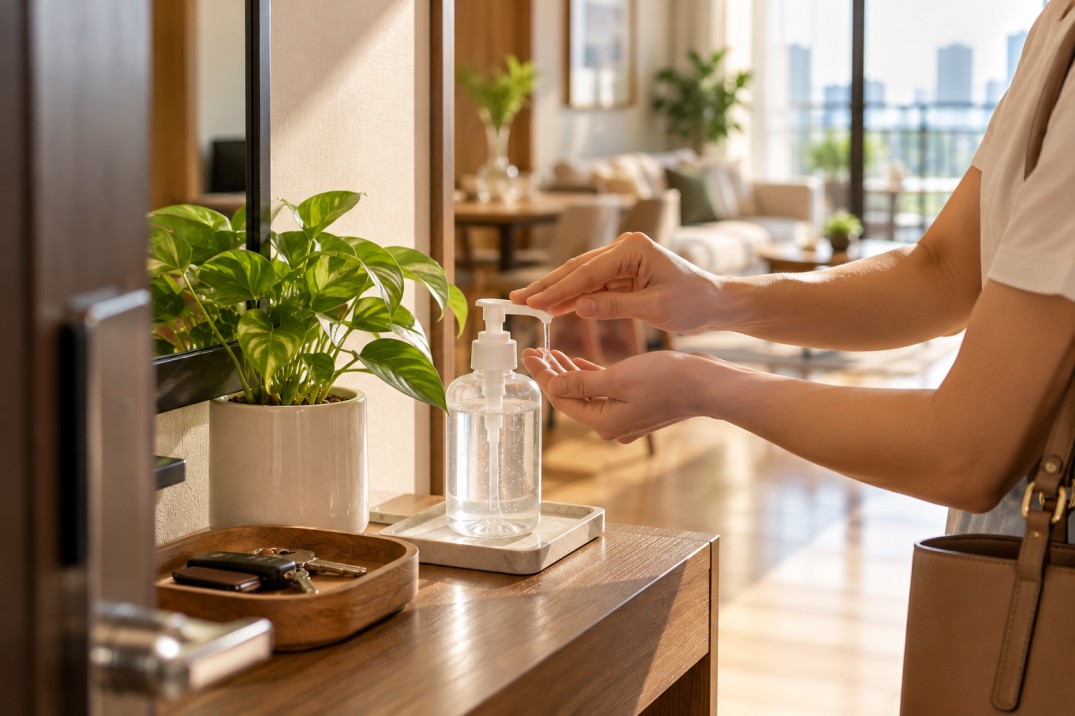
You can also place hand sanitizer near the entrance as a convenient reminder to practice hand hygiene. Make it a habit to wash your hands after returning home, especially after commuting or visiting crowded places.
5. Prepare a Household Health Essentials Kit
You do not have to wait until someone gets sick before preparing basic household supplies. Keep frequently needed items in one accessible place so you can find them easily when necessary.
Consider including:
-
A thermometer for checking body temperature
-
Tissues and a lined waste bin
-
Soap and hand sanitizer
-
Appropriate face masks
-
Oral rehydration supplies, when needed
-
Contact details for your healthcare provider
Check expiration dates regularly and store medicines according to their labels. Consult a healthcare professional or pharmacist about appropriate medicines, especially for children, pregnant individuals, and people with existing health conditions.
6. Make Rest and Healthy Meals a Priority
A healthy routine begins with everyday choices. Getting enough sleep, eating balanced meals, drinking enough water, and staying physically active when well can support overall health.
Prepare easy, nourishing meals at home using a variety of vegetables, fruits, protein sources, and whole grains. Keep a regular sleep schedule and make time to rest, particularly when your body needs it.
These habits support general well-being, but they should not be treated as substitutes for flu vaccination or other recommended preventive measures.
7. Practice Consideration for Everyone at Home
When one household member becomes sick, taking extra precautions can help reduce the risk of spreading the illness to others.
If you develop flu-like symptoms, stay home when possible, cover coughs and sneezes with a tissue or your elbow, and avoid close contact with other household members. Consider wearing a well-fitting mask when sharing indoor spaces, and improve ventilation whenever possible.
If feasible, have the sick household member rest in a separate room and avoid sharing personal items. Clean frequently touched surfaces and seek medical advice when symptoms are concerning or when the person is at higher risk of complications.
These practices are especially important in condominium communities, where residents also share elevators, hallways, and common amenities. Staying home when sick and following good hygiene practices can help protect both your household and your neighbors.
Small Habits Make a Healthier Home
Maintaining a healthy living space during flu season does not have to mean making major changes. Often, it starts with simple actions: cleaning regularly, allowing fresh air to circulate, washing hands, keeping essentials ready, and making time for rest.
For DMCI Communities residents, these everyday habits work hand in hand with thoughtful residential design. Through Lumiventt® Design Technology, DMCI Homes incorporates features that promote natural airflow and daylight, helping create a more comfortable living environment. By combining these home features with responsible health practices, residents can take meaningful steps toward supporting their well-being and creating a healthier community.
This flu season, let everyday care begin at home.